AI Agents, a $250 Million Newspaper Lawsuit, and Smarter Data Centers
Hi Friend,
In our AI Smart Lab session last week, one member told us she spends about an hour every morning posting the same content across TikTok, Pinterest, and YouTube Shorts by hand, then builds her Meta ads one at a time. We spent the session setting her up with a single content project instead. Brand colors, fonts, and references live in one place, and the work she repeats every month gets written down as reusable skills.
Victoria walked through our own version of it live. Research, copy, and assets all run through one project, and blocks of work that used to take four or five hours now take about one. Our monthly scheduling dropped from roughly ten hours to one hour.
Start with one project and one process you do every single month or every single day and ask AI (or us) how it can help you tackle it.
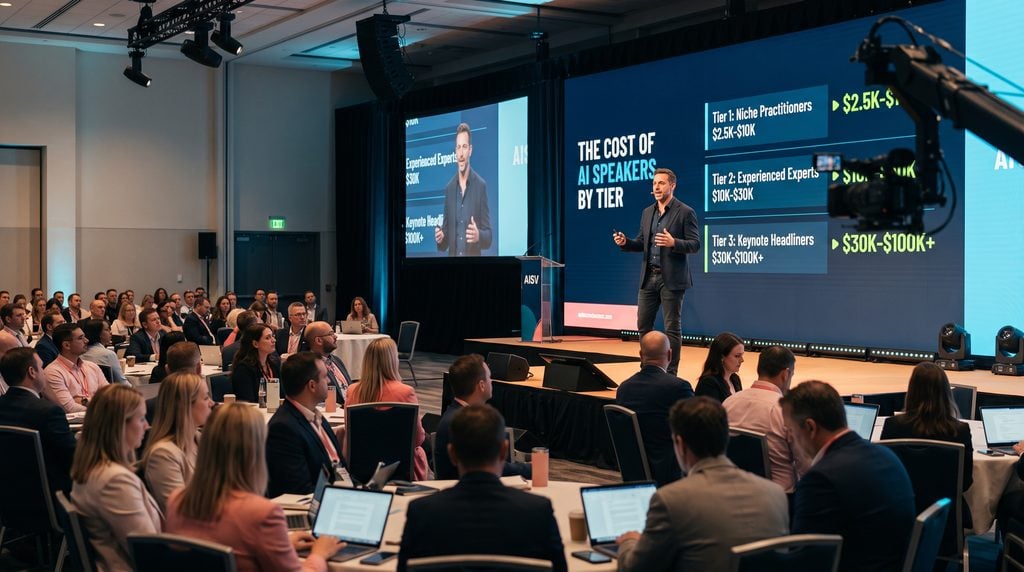
What an AI Speaker Costs
If you are putting an AI session on your event calendar, the fee is the easiest number to get wrong. This guide breaks down what AI speakers charge by tier, from $2,500 for niche practitioners up past $100,000 for the names people buy tickets for. It covers the 20% to 30% of your event budget that usually goes to the headliner, the 10% to 15% buffer you need for travel and AV, and why recording/IP rights are a separate line item most planners miss.
Our Most Requested Service: AI Strategy and Consulting
Clients keep coming to us with the same ask right now. They want their team to use the AI tools they are already paying for, without handing their data somewhere risky and without a six month project to get there.
In our AI Smart Lab this month, a member walked in doing an hour of manual posting every morning. We did not hand her a tool list. We mapped the work she repeats, put her brand context in one project, and turned her monthly tasks into reusable skills she owns and edits herself. Our own team runs on the same setup, which is how our monthly scheduling went from about ten hours to one or two.
That is what the work looks like. We look at your goals, build a safe, simple, phased roadmap, and set it up so your team can run it after we step back.

This week’s stories
Google Makes One Gemini Agent That Does the Work for You
Google Cloud launched the Gemini agent, which takes an objective instead of step by step instructions and returns finished work inside Gmail, Docs, Sheets, Slack, and Microsoft 365. It picks the model for each job, including Anthropic’s Claude. It also ships with spend caps that pause the agent when it hits your budget, and coworker agents that get their own company email addresses. PayPal already runs 10 million of these requests a week, and Bradesco cut document review from an hour to five minutes.
My Take: Google built a budget ceiling that stops an agent mid task, which tells you exactly how expensive these things get when nobody is watching the meter.. Giving an agent it’s own email address is a great idea AND a human needs to check that inbox and all of the agent’s documents and actions. If you are audited, you’ll need to know what your agents are doing. Give every agent a name and a human “boss” who is responsible for the inbox and actions. If you want the workflow mapped first, that is what our Workflow & SOP Creator is built for try it out today!.
Source: Google Cloud

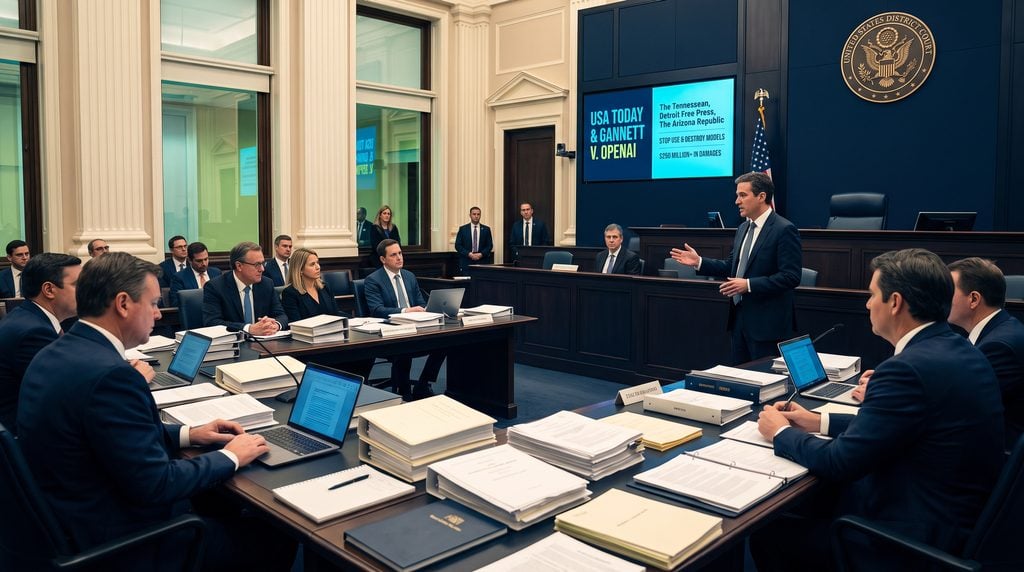
USA Today Sues OpenAI
Nineteen USA Today and Gannett companies sued OpenAI in New York federal court. The complaint covers work from 19 publications, including The Tennessean, the Detroit Free Press, and The Arizona Republic. They are asking for more than $250 million, plus a court order stopping the use of their journalism and destroying the models trained on it. In plain terms, the publishers want the models and/or their data deleted, not just paid for.
My Take: A licensing deal is the likely ending here, not a ruling. The habit we keep coming back to in our AI Smart Lab is the tedious one: record who reviewed or changed every piece of AI generated work before it goes out. We also run client copy through a platform guaranteed 99.9% plagiarism free. If a court ever asks you where a sentence came from, that record is the only answer that holds up.
Source: CourtListener
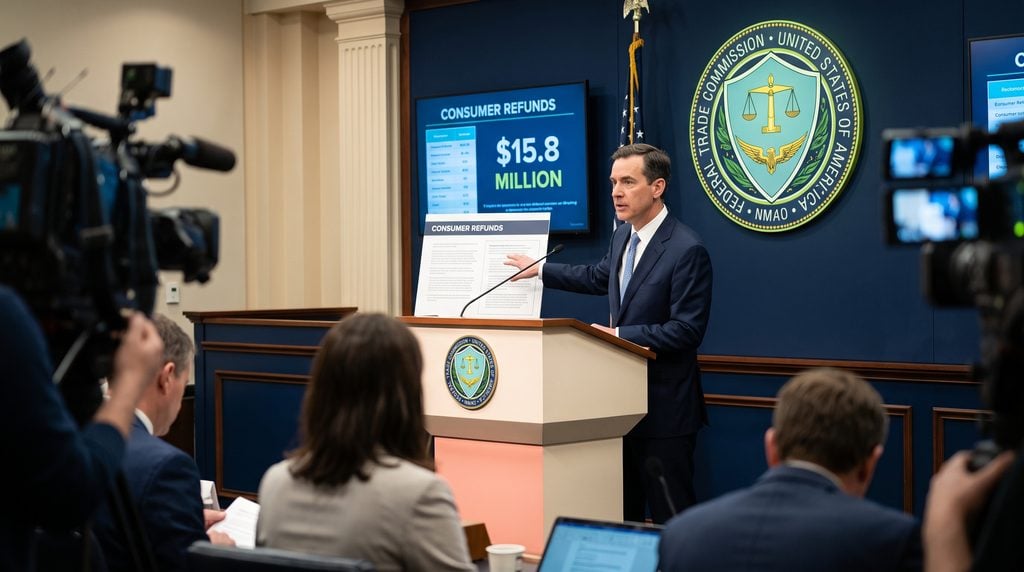
The FTC Is Paying Back 2.1 Million Users of an AI Money App
The Federal Trade Commission is sending more than $15.8 million to 2,124,796 customers of the cash advance app Cleo AI. The FTC said Cleo advertised hundreds of dollars in advances that almost nobody received, charged extra for instant transfers that often arrived the next day, and made the subscription hard to cancel. Emails go out through October 26, and payments start October 27.
My Take: The AI rules people are waiting on Congress for have already arrived, and they are the same consumer protection laws that have been on the books for decades. Putting “AI” in your product name does not create a new legal category, it just raises what you promised. A claim about what your AI can do is an advertising claim.
Source: Federal Trade Commission
A Health Insurance Company Put an AI Voice Agent on Every Call
eHealth, a national health insurance agency, uses an AI voice agent called Alice to screen Medicare callers. The enrollment window is only about 54 days, and call volume used to overwhelm the team. The pilot started with after hours calls that nobody was picking up before. Alice now answers every call right away, holds a 77% exceptional satisfaction rating, and shows a 27% higher purchase rate than the outsourced screeners they used before.
My Take: The useful part is what the team found during the pilot, which is that the agent was efficient and short on empathy, and they spent months fixing that instead of shipping it anyway. Most teams copy the metric and skip the correction, then wonder why their bot gets hung up on. The fix they built is small and smart: when a second person joins the line, the call goes straight back to a human. We’ve seen big results with AI voice agents and big frustration. It’s important that you listen to the pilot calls, adjust the AI to really work for you, and set up triggers that lead to a human. Empower the humans with the text version of the agent so they have more information at their fingertips too!
Source: CX Dive

MIT Researcher Finds Data Centers Running at 15% Capacity
MIT associate professor Christina Delimitrou uses machine learning to redesign cloud software so data centers get more work out of hardware they already own. Her research found large cloud systems running at only about 15% of capacity. Her group built a tool called Seer that predicts web application slowdowns and prevents them before they spread.
My Take: The AI energy conversation has been framed as a supply problem, and this says it is a waste problem. We are being told the answer is more power plants when it’s possible that a majority of the machines already built are sitting idle.
Source: MIT News

Tool picks of the week
- Read AI: An AI notetaker that records your online meetings and writes the notes live.
- Snitcher: Identifies the companies visiting your website, reveals contact details, and triggers outreach automations.
- HeyGen: Creates studio-quality videos with lifelike avatars and voices for marketing and social media.
Got a burning question, a fresh take, or just want to share your latest AI wins? Hit us up at [email protected]. Your insights keep this community growing and thriving!
Have a great day!
-Nicole A. Donnelly
Founder, AI Smart Ventures
AI Strategy – AI Training – AI Consulting – AI Implementation