AI Content Copyright Risk: What Business Owners Must Know
Last Updated: July 2026
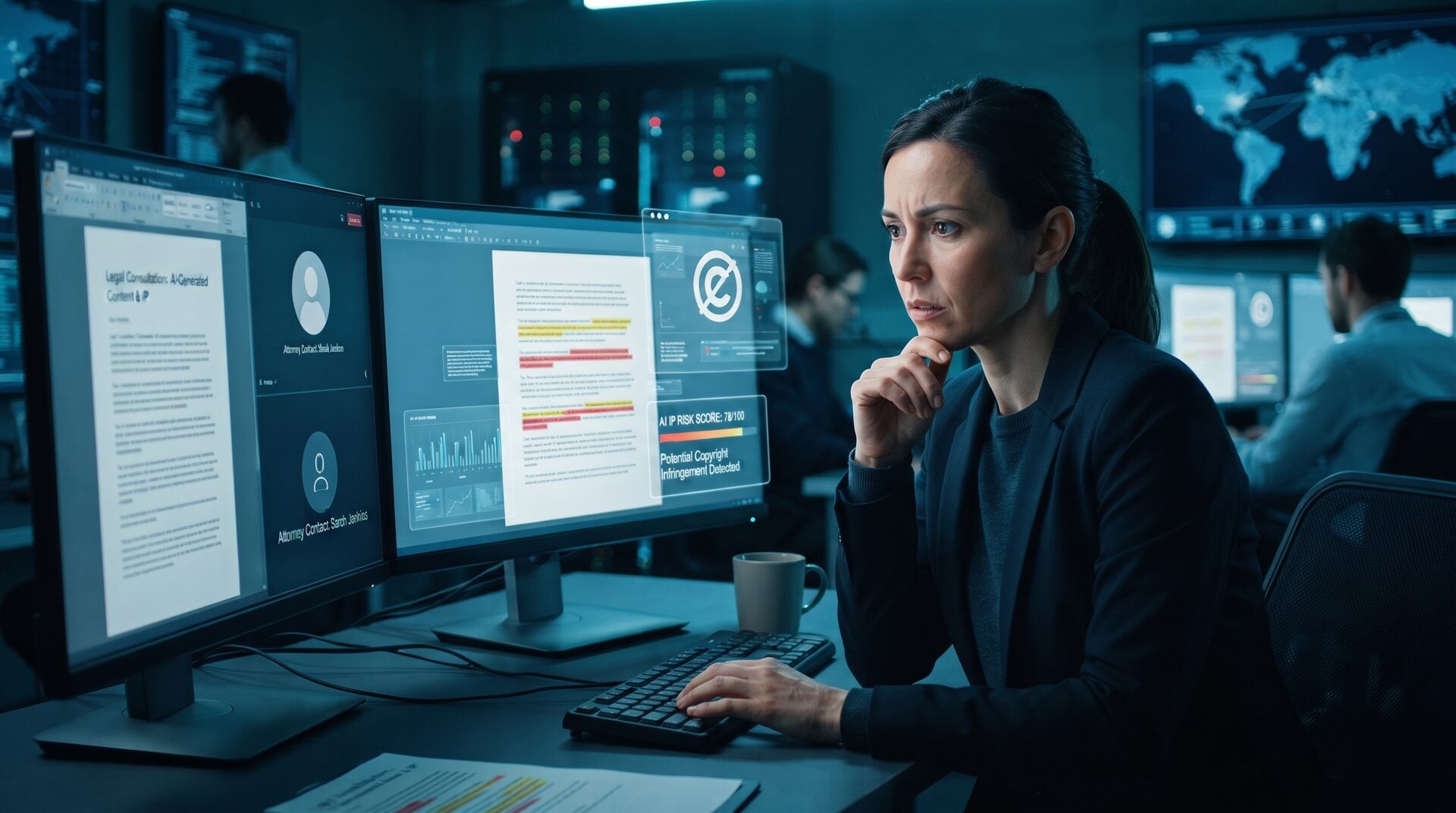
AI content copyright risk is a real problem for business owners. It is the legal and financial risk you face when you use AI tools to make content. That content might copy current protected work. Or it might belong to no one. That means you cannot own it as a business asset.
AI tools learn from huge datasets. These datasets often include protected content without clear licenses. The output can look too much like current work. This can trigger a legal claim. Purely AI-made work often belongs to no one. That means you have nothing to protect or defend.
AI Smart Ventures has helped hundreds of growing businesses navigate AI adoption and copyright law. Many owners adopt AI tools fast and skip the review step. This creates legal blind spots that grow over time. Getting this right means knowing what you can own and what risks you already face.
The rules around AI and copyright are changing fast. Courts and federal agencies issue new guidance all the time. The standards today will likely get stricter in the next few years. Businesses that build clear policies now will be ready when a dispute arrives. The sections below break down the key risks. They also give you a plan to protect your content.
Key Takeaways
- US law does not grant copyright to purely AI-made content. A human author must contribute meaningful creative input to claim ownership of any final work.
- The main risk comes from training data. AI models learn from large datasets that may include protected content. The output can accidentally mirror those original works.
- The 10-20-70 Rule is a practical safeguard. AI should help with 10 to 20 percent of the creative step. Your team drives the other 70 percent through editing and original input.
- Internal policies set a clear standard. Start with an approved tool list. Add a disclosure rule. Then add a human review step. These three form the core of any good AI content policy.
- Some platforms offer legal protection. Platforms like Adobe Firefly and Microsoft Copilot cover users when AI content triggers a copyright claim.
- Proactive auditing reduces your risk. Review AI-assisted content before you publish. Keep revision records. This creates a clear compliance trail.
These takeaways give a base for protecting your brand assets and avoiding costly disputes. The sections below expand each point into clear steps.
What is US copyright law on AI content?
US copyright law is clear. Works made entirely by AI cannot be protected. The US Copyright Office has said this standard many times. The Thaler v. Perlmutter case backed this up. A court ruled that a painting made fully by AI could not be registered. For growing businesses, raw AI output is not an asset you can own.
The FTC has issued guidance on generative AI and how it intersects with current law. Businesses should review this before deploying AI tools for content creation. It outlines where your responsibilities begin.
The Copyright Office reviews each case on its own. Reviewers look for proof that a human had real creative control. Submitting a simple prompt is not enough. Works that mix AI and human editing may qualify for some protection. But the human parts must be clearly recorded. Know where this line falls if you use AI for branding or marketing.
Can my business own AI-made work?
Your business cannot own content that AI makes on its own. The Copyright Office treats purely machine-made output as public domain. Anyone can copy or reuse it for free. Paying for an AI subscription does not give you rights to the output. The result is content that no one can claim or protect.
To own the content, your team must do more than write a prompt. Rewrite it greatly. Add original structure and examples from your own history. Change the tone and voice in a meaningful way. These all count as human creative input.
Keep revision records and save your drafts. Record your editing decisions. This paper trail supports your ownership claim if it is ever challenged.
What are the main risks of using AI tools?
The main risk is that AI output may look too much like copyrighted work. AI tools learn from huge collections of text and images. Many of those include protected material. Made content can copy phrases, structures, or images from current works. That can trigger a legal claim. In most cases, you bear that legal risk, not the tool provider.
A second risk is reputational. Even a failed claim creates trouble and legal fees. A third risk comes from platform terms of service. Some AI tools keep rights to the content they make. This limits how you can use that content commercially.

Read platform terms before you adopt any AI tool. Many owner-operators skip this step. Ownership clauses, use rights, and indemnification terms vary a lot across providers. That variation has real financial impact for growing businesses.
Which AI tools offer copyright protection?
Some AI platforms protect users from copyright claims through commercial indemnification. Microsoft Copilot, Adobe Firefly, and Getty Images’ tools offer this kind of protection. Each has specific conditions you must follow. You must stay within the platform’s approved guidelines. You must also avoid prompts that try to copy specific protected works.
Adobe Firefly is built on licensed and original content. This lowers the risk that its output copies protected material. Microsoft’s Copilot Copyright Commitment covers business customers who use Copilot content commercially. For growing businesses using AI in client work or marketing, these differences matter. Price is not the only factor to weigh.
Indemnification is not a blanket guarantee. You must follow the platform rules closely. You must also keep accurate records of how you use the tool. Treat protected platforms as a strong base. Pair them with a steady internal review step for full protection.
Ready to build a safe AI content workflow? AI Smart Ventures offers AI Consulting for growing businesses that want to adopt AI tools without legal blind spots. Schedule a consultation to build a content step that protects your assets.
What should an AI content policy include?
An AI content policy is a written set of rules. It shows which tools your team can use. It sets what review steps are needed before you publish. It also says how to flag AI use in-house. Without a policy, each employee makes their own tool decisions. This creates uneven risk across the business. A clear policy gives every team member a standard to follow.
A strong policy covers four core elements. First, an approved tool list shows which platforms you can use for each content type. Second, a disclosure rule requires team members to flag all AI-assisted work before review. Third, a human editing rule sets a minimum edit level. Use the 10-20-70 Rule: AI helps with 10 to 20 percent of the step. Your team drives the other 70 percent through editing, original input, and creative direction. Fourth, a record-keeping rule tells the team to save drafts and revision notes. This records supports your ownership claims.
The NIST AI Risk Management Framework offers useful guidance for businesses building internal AI policies. It covers risk categories that apply directly to content creation and compliance.
How do I audit AI content before publishing?
An AI content audit checks your content for copyright risk before it goes live. This review should happen at the editorial level, not just at the tool level. The AI output is only one step in a larger publishing process. Building this checkpoint into your workflow is far easier. Auditing content after you publish costs much more time and risk.
Start with an originality check. Use a tool like Copyscape or Originality.ai to scan for matches with published works. Then have an editor review the content. They should check that it reflects your brand voice and contains original insights. For high-stakes materials like whitepapers or legal content, add a brief legal review. After you publish, set a reminder to re-audit content. Do this if the AI tool updates its training data or terms.
What happens if I get a copyright claim?
If your business gets a copyright notice about AI-made content, stop using that material right away. Do not share or publish it again. Doing so after a notice increases your legal exposure. Consult an intellectual property attorney within 24 to 48 hours. Let your counsel lead all communications with the claimant.
A copyright claim does not mean you are on its own liable. The outcome depends on several things. How similar is the disputed content to the original? Did your team make big changes? Which AI platform did you use? If you used a platform with indemnification and followed its guidelines, the provider may offer legal support. Your editing records and policy documents will be central to your defense.
Frequently Asked Questions
Does the US Copyright Office register AI-made works?
The US Copyright Office does not register works made entirely by AI without major human creative input. Apps for purely machine-made content are rejected. Current law requires human authorship for protection. Works that mix AI and human contribution are reviewed case by case. Reviewers check which parts show real human creative control.
Can I use AI content for commercial marketing?
Yes, with conditions. AI-assisted content may be used commercially when your team has made substantial human changes. The platform must also grant commercial rights in its terms of service. Some platforms restrict commercial use entirely. Others keep rights to the output they make. Review the terms for every AI tool before using it in paid campaigns or branded materials.
What is the 10-20-70 Rule for AI content?
The 10-20-70 Rule is a practical guide for keeping human authorship in your work. AI tools help with 10 to 20 percent of the step. This is usually the first draft or idea stage. Your team then contributes the other 70 percent. They do big editing, add original insights, and change the structure. This ratio helps show that the final product reflects real human creativity.
Are AI-made images protected by copyright?
Images made entirely by AI without human creative direction are not protected under US law. The same human authorship rule applies to images and written content alike. If a human designer uses AI as just one part of a broader creative step, that changes things. Their original artistic choices may qualify for protection.
What do I do if AI output resembles a competitor’s work?
Stop using and sharing that content right away. Document the output, the prompt you used, and the date. Consult an intellectual property attorney to check how similar the content is. They can tell you if it creates a legal risk. This shows why a pre-publication review matters. Catching issues before you publish costs far less than managing a formal dispute.
Do AI tool providers protect me from infringement claims?
Some do, and some do not. Platforms like Microsoft and Adobe offer commercial indemnification programs. These cover users when AI output triggers a copyright claim. But they only apply within specific usage guidelines. Most free or consumer-grade AI tools do not offer this protection. Review the terms of service before you choose any platform. The Stanford AI Index tracks how AI legal protections are evolving, which helps business owners make better tool choices.
How do I document human authorship for AI content?
Save all versions of the content, from the original AI output to the final version. Keep notes on the specific edits your team made. Record the creative decisions behind those edits. Use the revision history in your content management system when you can. This records shows that your team shaped the final product. That record is the foundation of any ownership claim.
What is the biggest copyright mistake owners make with AI?
The most common mistake is publishing AI content with no human review. Owners assume the output is safe and legally owned. It often is not. This creates two risks at once. First, you may face infringement claims from protected sources in the training data. Second, you cannot enforce rights if a competitor copies your content. A simple review and edit step removes both risks at a fraction of the cost.
How can I get help managing AI content copyright risk?
AI Smart Ventures works with growing businesses to build AI content policies. We also audit workflows for legal exposure and train teams on safe AI use. Schedule a consultation to get a tailored review of your current step. You will also get a clear plan for reducing copyright risk.
Executive Summary
AI content copyright risk is a real concern for any business. This is true for any business using AI tools every day. US law does not protect purely AI-made work. AI output can also accidentally copy protected content from training data. The fix is not to stop using AI. Use it with a clear process. Build an internal content policy. Apply the 10-20-70 Rule. Choose platforms with commercial indemnification. Run pre-publication audits and keep revision records. These steps protect your assets. Businesses that act now will build a content operation that grows without legal liability.
What Should You Do Next?
Review your current AI tool list. Check that each platform’s terms permit commercial use and offer indemnification. Draft a one-page AI content policy. Include an approved tool list, a disclosure rule, and a minimum editing standard. Then build a review checkpoint into your publishing workflow. No AI-assisted content should go live without a human editorial pass. AI Smart Ventures offers AI Consulting for growing businesses that want a compliant AI content strategy. Schedule a consultation to protect your brand assets and move forward with confidence.
People Also Read
- AI Data Privacy in 2026: What Your Business Needs to Know Before Deploying AI Tools
- Should You Outsource Your AI Marketing? A Decision Framework for Business Owners
About the Author
Nicole A. Donnelly is the Founder of AI Smart Ventures and an AI Adoption Specialist with 20 years of history as a founder and CEO and over a decade leading AI adoption plans. She helps businesses connect AI with clarity and confidence, driving innovation and lasting growth. Nicole has trained over 20,217 experts in Applied AI, delivered 624 workshops, and worked with close to 1,000 businesses across diverse industries.
Expertise: AI Transformation, AI Strategy, AI Rollout, AI Adoption, Applied AI, Marketing, Business Operations
Disclaimer: This content is for informational purposes only and does not constitute expert business or tech advice. Results vary based on industry, current systems and rollout commitment. Contact AI Smart Ventures for a consultation about your specific situation.