How to Structure Your Conference Agenda Around an AI Keynote Speaker: A Practical Guide for Event Planners in 2026
Introduction: Why the AI Keynote Requires a Strategic Agenda
AI is one of the most requested conference topics in corporate event planning 2026. But here is the problem: audiences are also tired of vague AI talk. They have heard the hype. What they want now is clarity, relevance, and a path to action.
That is why an AI keynote speaker cannot be treated like just another 45-minute slot between coffee and lunch. When the keynote stands alone, attendees often leave energized but unclear on what to do next. They may remember a few big ideas, but they do not always leave with a shared vocabulary, a practical framework, or confidence about implementation.
A stronger approach is to build the full conference agenda structure around the keynote. In other words, let the AI keynote set the strategic direction, then use the rest of the event to help attendees apply, test, discuss, and operationalize what they heard. That is where the real value shows up. It is also where a partner like AI Smart Ventures can make a major difference by combining keynote speaking, AI workshops for business, and practical follow-through that turns inspiration into measurable business results.
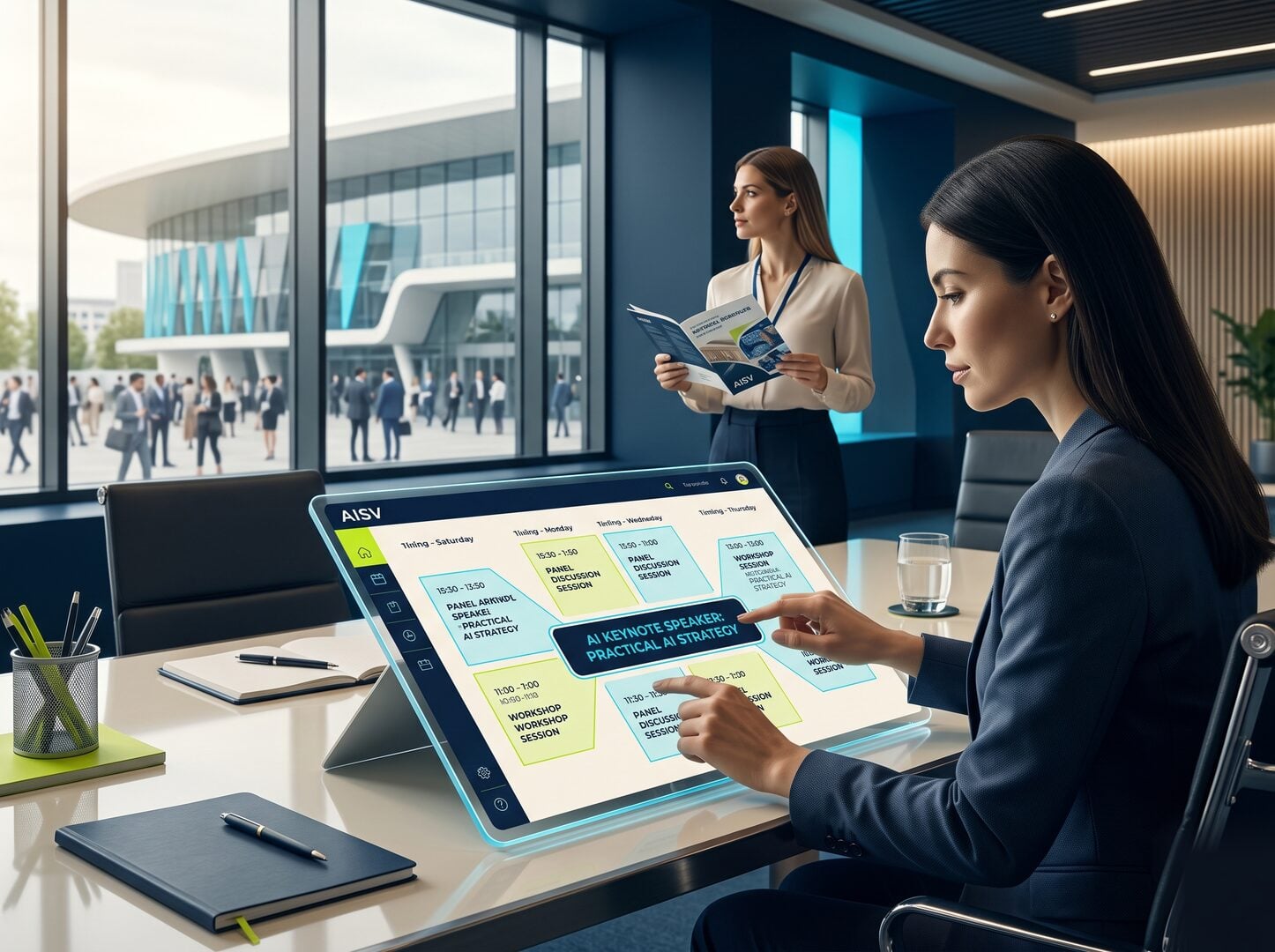
The Event Planner’s Timeline: Before and After Booking Your AI Speaker
If you are asking, what should event planners do before and after booking an AI speaker for a conference? start here: do not begin with the speaker. Begin with the audience.
Before Booking: Audit Readiness and Define Outcomes
Before you send an inquiry, get clear on your audience’s current AI literacy. In most corporate events, the room is mixed. Some attendees are still AI-curious. Others are already testing tools in marketing, operations, HR, or customer service. A few may be thinking at the governance or investment level.
Use a short pre-event survey to segment attendees into three simple groups:
- Beginner: They understand the buzz but have not applied AI consistently.
- Operational: They are using tools, but adoption is scattered and uneven.
- Strategic: They are thinking about governance, ROI, workflow integration, and scale.
That one step changes everything. It helps you book the right AI keynote speaker, shape the right message, and avoid the classic mismatch where the talk is either too basic or too technical.
Right after that, define the business outcome you want the keynote to drive. Be specific. Good goals include:
- Reduce automation anxiety across teams
- Increase adoption of approved AI tools
- Create leadership alignment on AI integration strategy
- Generate role-specific use cases for departments
- Kick off a broader upskilling or implementation initiative
If you cannot name the outcome, you will struggle to measure the event later.
After Booking: Customize the Talk and Build the Landing Zone
Once the speaker is confirmed, schedule a deep-dive briefing call with your executive team, event lead, and the speaker. This is not a courtesy call. It is a working session. Use that meeting to cover your audience mix and AI maturity, the biggest 2026 industry pressures your attendees are facing, internal terminology, strategic priorities, sensitive topics, what leaders want attendees thinking and doing after the keynote, and which examples will feel credible in your sector.
This is where a customized keynote becomes far more valuable than a generic one. AI Smart Ventures builds talks around practical business outcomes, not abstract futurism. That matters when your audience is made up of decision-makers who need relevance, not theater. Before you finalize the engagement, review The AI Speaker Pre-Booking Checklist: 20 Questions Every Event Planner Should Ask Before Signing a Contract to make sure you are covering all your bases.

After the Event: Move Fast While Energy Is High
The first 48 hours after the keynote matter more than most planners realize. If you wait a week to follow up, momentum drops hard. Send actionable resources quickly while the room is still talking about the session. A strong post-event package can include key takeaways from the keynote, slides or approved recap notes, a simple action guide for teams, a framework to help attendees map workflows and spot automation opportunities, and registration details for deeper training or workshops.
Then build a 30-60-90 day feedback loop. Ask attendees what they tried, what changed, and where they got stuck. Track whether teams adopted new tools, launched pilots, or reduced manual work. That is how you move from applause to evidence. For more on this, see After the AI Speaker Leaves: How to Turn a One-Day Leadership Session Into Lasting Business Change.
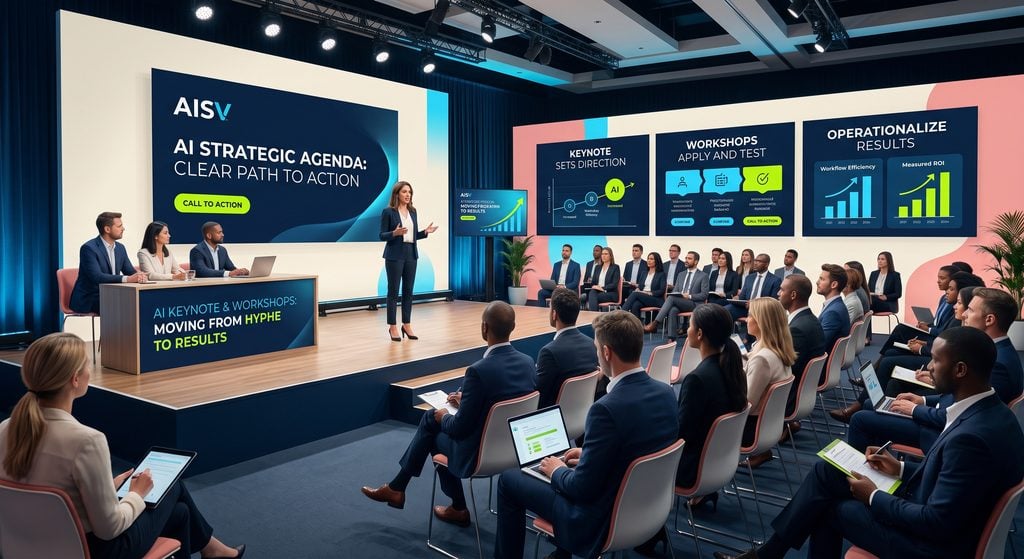
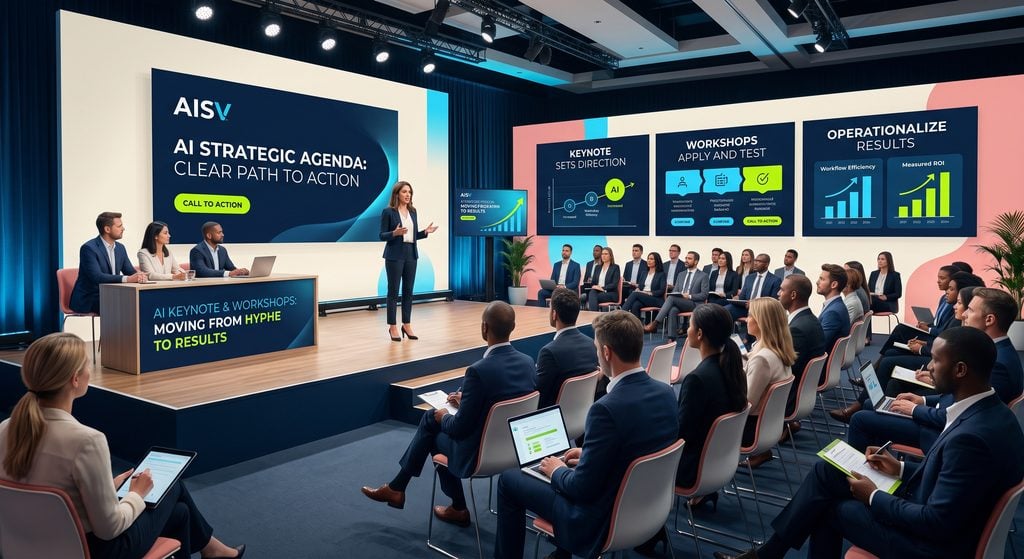
Designing the Core Agenda: Structuring Your Event Around the AI Keynote
If you are wondering, how do I structure a conference agenda around an AI keynote speaker? the simplest answer is this: use a vision-to-action model.
Use the Keynote to Set the Day’s Strategic Vocabulary
Place the AI keynote in the morning, ideally after a short welcome and a sharp industry context session. This gives the speaker a fresh room and lets the keynote establish the language, urgency, and frameworks for the rest of the day. Avoid putting a highly technical session right before the keynote. That tends to narrow the room too early. Instead, use the pre-keynote slot for a state-of-the-industry briefing, executive welcome, or market outlook. Then let the AI keynote speaker expand the frame and connect AI to business reality.
Add Immediate Reflection and Audience-Specific Dialogue
Do not send people straight to lunch the second the keynote ends. That wastes the peak attention window. Instead, schedule one of these immediately after: a moderated Q&A, a fireside chat with the speaker and an internal executive, or a short audience polling session tied to key themes. This is where people ask the real questions. What does this mean for our team? What about security? Where do we start? That conversation helps translate a big-stage message into something more personal and practical.
Build in White Space and Narrative Continuity
One of the smartest agenda moves is also one of the least used: create white space after the keynote. Give attendees 20 to 30 minutes to talk with peers, capture notes, and process implications. AI topics trigger strong reactions, and people need room to sort through them. Then keep the narrative alive. Brief your MC, moderators, and session hosts to reference the keynote’s core frameworks throughout the day. That continuity is what makes the event feel intentional instead of fragmented.
Curating the Experience: What Sessions Should Surround an AI Keynote?
Once the keynote sets direction, the next question is: what sessions should surround an AI keynote at a corporate conference? The answer is simple. Pair vision with application.
Move from Big Ideas to Hands-On Confidence
The best post-keynote breakouts are practical. Attendees should leave those sessions having done something, not just heard more about AI. Strong options include applied AI workshops for business focused on real workflows, prompt engineering sprints that help attendees get quick wins, role-specific breakout sessions for marketing, HR, operations, finance, or leadership, and tool labs where people can test platforms mentioned on stage. If you’re wondering what to expect from a workshop format, What Happens in an AI Workshop? Is It Right for Your Team? walks through exactly that.
Add Internal Translation, Not Just External Expertise
One smart move is to host an internal leader panel after the keynote. Bring in department heads and ask a focused question: based on what we just heard, what will this mean for our teams over the next 12 months? That panel shows attendees that leadership is listening and localizes the keynote — suddenly the conversation is about AI in your company, in your workflows, with your constraints.
Create Role-Based Tracks
Not everyone in the room needs the same next step. Use a simple track model:
- Executive Track: AI integration strategy, governance, ROI, risk
- Manager Track: Team adoption, change management, workflow redesign
- Functional Track: Role-specific tools, prompting, hands-on use cases
That structure keeps the keynote broad enough to unify the room while making the follow-up specific enough to be useful. For associations and membership organizations running similar programming, see AI Programs for Industry Associations: Moving Beyond Demo Fatigue.
Scaling the Narrative: Integrating an AI Speaker into a Multi-Day Leadership Summit
If your event is longer, the question becomes: how do I integrate an AI speaker into a multi-day leadership summit? In a multi-day format, the keynote should act as the opening anchor, not the entire AI strategy.
Day 1: The Why
Use Day 1 to challenge assumptions and establish urgency. This is the best place for the AI keynote speaker to open the summit and disrupt legacy thinking. The goal is to help leaders understand what is changing in 2026, what is at risk if they delay, and what becomes possible if they move with intention. This day should feel catalytic: keynote, executive discussion, and strategic reflection.
Day 2: The How
Day 2 should move into execution. Once leaders understand why AI matters, they need to know how to apply it without creating chaos. This is where executive masterclasses, working sessions, and implementation-focused workshops fit well. A partner like AI Smart Ventures can extend the keynote into deeper sessions on AI implementation planning, workflow mapping, tool selection, governance guardrails, and department-specific adoption. For leaders preparing to communicate this to their boards, How to Build a Board-Ready AI Investment Case: A Practical Guide for Executives is a useful companion resource.
Day 3: The Who
By Day 3, the conversation should shift to people, leadership, and sustainability. AI transformation is not only a technology issue — it is a change management issue. Focus the final day on upskilling and training, human-in-the-loop review processes, responsible AI use policies, team communication and change readiness, and leadership alignment on next steps. Thread the keynote speaker’s language into each day’s opening and closing remarks so the summit feels like one connected story. For guidance on leading that internal shift, see How to Build an AI Change Management Framework.
Maximizing ROI: How to Ensure Your AI Keynote Delivers Lasting Impact
If you are asking, how do I maximize the impact of an AI keynote speaker at my event? the short answer is this: build a post-event system.
Turn the Keynote Into Ongoing Learning
First, record the session and repurpose it into short internal learning modules, assuming your speaker agreement allows it. A great keynote should not disappear after one day. Break it into clips or topic-based segments that can live inside your LMS, manager enablement library, or internal communications. Then connect the event to formal learning. If attendees left excited but under-skilled, post-event enrollment in an Applied AI course or a custom team workshop helps convert interest into capability. How to Build an AI Professional Development Program is a practical starting point for building that structure.
Create Internal Ownership
Do not leave follow-through to chance. Build an internal AI task force from your most engaged attendees. Give that group a simple mandate: identify top use cases surfaced at the event, prioritize one or two quick-win pilots, share learnings with leadership, and recommend where consulting, advisory, or training support is needed. This creates internal champions instead of hoping momentum spreads on its own.
Tie the Event to Measurable Business Outcomes
The strongest events connect keynote energy to real operational movement. That may mean launching an AI consulting engagement, bringing in advisory support, or identifying manual workflows worth redesigning. Measure results over the next quarter using practical indicators such as adoption rate of approved AI tools, number of workflows mapped for automation, reduction in manual repetitive tasks, team confidence scores around AI use, and new pilots launched by departments. For a broader look at this, How to Get Measurable Business Results from an AI Speaker covers the measurement framework in detail.

Conclusion: Turn AI Inspiration into Measurable Results
A well-run AI event does not treat the keynote as the finish line. It treats it as the catalyst. The strongest conference agenda structure uses the AI keynote speaker to create urgency, alignment, and shared language, then uses the rest of the event to help people apply what they learned in ways that actually matter.
That is where AI Smart Ventures stands out. The team does not just deliver engaging talks. They help organizations connect keynote inspiration to hands-on training, practical roadmaps, and measurable business results. If you are planning a conference, company kickoff, or multi-day leadership summit in 2026, and you want more than another generic AI session, now is the time to design the agenda differently.
Ready to Transform Your Next Event with AI? Book a tailored consultation with AI Smart Ventures to secure a keynote speaker and custom workshop that drives real business results.
FAQ
How do I structure a conference agenda around an AI keynote speaker?
Use a vision-to-action model. Put the AI keynote in the morning to set the strategic frame, follow it with a Q&A or fireside chat, then move into tactical breakouts, workshops, and peer discussion that help attendees apply the ideas.
What should event planners do before and after booking an AI speaker for a conference?
Before booking, assess audience AI maturity and define the business outcome you want the keynote to drive. After booking, run a deep briefing with leadership, then follow the event with resources, training pathways, and a 30-60-90 day measurement plan.
How do I integrate an AI speaker into a multi-day leadership summit?
Use the speaker as the opening anchor on Day 1 to establish the why. Then build Day 2 around implementation and Day 3 around change management, governance, and upskilling, while carrying the keynote’s frameworks through the full summit.
What sessions should surround an AI keynote at a corporate conference?
The best supporting sessions are practical and role-specific. Use workshops, internal leader panels, prompt sprints, and tool showcases to help attendees move from inspiration to real application.
How do I maximize the impact of an AI keynote speaker at my event?
Extend the keynote beyond the stage. Repurpose the content into internal learning, create an AI task force, connect attendees to deeper training, and measure adoption, workflow improvement, and tool usage over the following quarter.