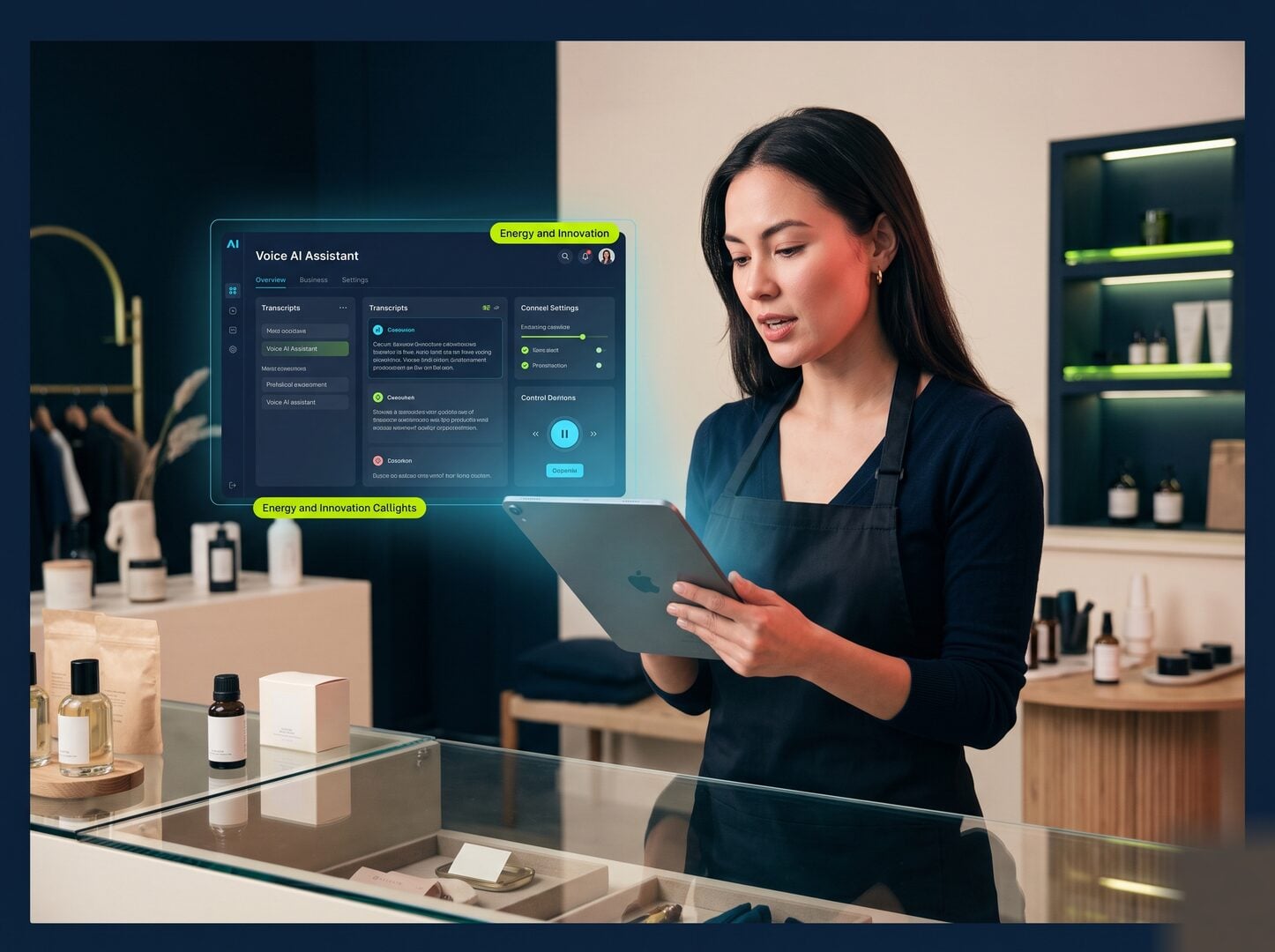
How to Add Voice AI to Your Small Business in 2026
The Ultimate Guide to Voice AI for Small Businesses
If you run a small business, you already know the problem. The phone rings while you are with a client, driving to a job, working the front desk, or trying to finish payroll. You let it go to voicemail, plan to call back later, and then life happens. That missed call might have been a new customer, an urgent service request, or an easy booking. For owner-operators, missed calls are not just annoying. They are lost revenue.
That is why voice AI for small business is getting real attention right now. Not because it is trendy, but because it solves a very practical problem. A modern voice AI agent can answer calls, respond to common questions, capture lead details, route urgent issues, and even book appointments without you hiring a receptionist or building custom software. And yes, you can do this without a dev team.
In this guide, we are going to walk through what voice AI actually is, why AI phone answering matters so much for customer service, how to choose the right AI systems for your company, how to add a voice AI agent to your small business, and when it makes sense to bring in one of the best agencies for voice AI development. At AI Smart Ventures, this is the kind of work we care about most: helping businesses stop experimenting blindly and start using AI in ways that create measurable ROI.
Before we get into the how, one quick clarification. Voice AI is not the old-school phone tree that says, “Press 1 for sales.” Modern voice AI sounds conversational. It can understand intent, ask follow-up questions, and keep the interaction moving. Done well, it feels less like a menu and more like a capable front-desk teammate.

Why Owner-Operators Need AI Phone Answering for Customer Service
For an owner-operated business, the phone usually rings at the worst possible moment. If you are a plumber, you are on a job. If you run a salon, you are with a client. If you are a consultant, you are in a meeting. That means every incoming call creates friction. You either interrupt the work in front of you, or you risk losing the person calling.
This is where AI phone answering for owner-operated business becomes so useful. A voice AI agent works like a digital receptionist that never clocks out. It can answer calls 24/7, greet the caller, understand what they need, and move them to the right next step. That might mean answering a pricing question, collecting contact details, booking an appointment, or flagging an emergency request for immediate follow-up.
For voice AI for customer service small business use cases, the biggest win is consistency. Customers get an answer right away instead of hitting voicemail. Your business sounds responsive even when you are busy. And your team, even if your “team” is mostly you, gets fewer interruptions during the day. If you want a deeper look at what this can look like in practice, AI Smart Ventures has a useful piece on AI customer service without a support team in 2026.
There is also a real financial upside. Hiring a full-time receptionist is expensive. Missing leads is expensive too, even if the cost is hidden. A voice AI system can reduce both problems. Service businesses are already using it to qualify inbound leads, answer repeat questions, and keep the calendar full. Think about a salon handling appointment requests after hours, a home services company routing urgent calls, or a solo advisor capturing every inquiry while staying focused on delivery. In each case, the value is simple: fewer missed opportunities, less chaos, and better customer experience.
How to Choose the Right AI Systems for Your Company
Voice AI can be powerful, but it should not live on an island. If you are asking, “What AI systems are right for my company?” the better question is, “What business process am I trying to improve, and what does the system need to connect to?” Voice AI is one piece of a broader AI automation stack. It works best when it fits cleanly into your operations.
Start with three filters: ease of use, integration, and reliability. Ease of use matters because if the tool is hard to manage, it will sit unused. Integration matters because your voice agent should pass information into the systems you already use, like your CRM, scheduling tool, or inbox. Reliability matters because if the system drops calls, misroutes leads, or creates messy records, it becomes another problem to manage.
Security matters too, especially if your callers share personal or business information. Choose business-grade tools with clear privacy practices and secure workflows. If you are sorting through vendors, it is worth reading The Owner-Operator’s Guide to AI Vendor Security and SOC 2 Compliance and AI Tool Security for Owner-Operated Businesses: A 2026 Guide to Keeping Your Data Safe.
A smart way to evaluate AI systems for your company is to map the workflow first. Where are the manual bottlenecks? Where do leads get lost? Where does your team repeat the same information over and over? Once you can see the process clearly, the right tool choices become a lot easier. If you need help with that bigger-picture thinking, AI Smart Ventures offers strategic guidance through its advisory work, and articles like How to Choose the Right AI Tools for Your Business in 2026 can help you get grounded before you buy anything.
Step-by-Step: How Do I Add a Voice AI Agent to My Small Business?
To add a voice AI agent to your small business, you do not need to start with code. You need to start with clarity. The businesses that get the best results are usually the ones that define the job before they pick the tool.
Step 1: Define the Agent’s Primary Goal
Pick one high-value use case first. Do you want the agent to answer FAQs? Book appointments? Capture lead information? Route emergency calls? Confirm office hours and service areas? Keep version one tight. A focused voice agent is easier to train, test, and improve.
Step 2: Choose a No-Code or Low-Code Platform
Look for a platform built for business users, not developers. You want something with a clear setup flow, simple call routing, and integrations with the tools you already use. If you are weighing whether to buy a platform or build something more custom later, Buy vs. Build AI: A Strategic Guide for Owner-Operators is a good next read.
Step 3: Train the Agent on Your Real Business Information
This is where a lot of businesses get lazy, and it shows. Feed the system your actual FAQs, service details, pricing ranges, office hours, booking rules, and escalation paths. Then shape the tone so it sounds like your business. Friendly? Direct? More formal? More conversational? Give really clear instructions. This is still a computer. It needs the programming. If you want help thinking through prompts and training inputs, Generative AI Prompting for Business Owners: Real Results Without the Tech Jargon is useful here.
Step 4: Connect It to Your Workflow
Set up call forwarding, calendar access, CRM capture, or email notifications so the agent does not just answer calls, but actually moves work forward. If a caller books an appointment, it should land on the calendar. If they request a quote, their details should go into your lead system. If the issue is urgent, the right person should get notified fast.
Step 5: Test Internally Before You Go Live
Run sample calls. Try easy scenarios, weird scenarios, and edge cases. Ask someone to call in with a common question. Ask someone else to mumble, interrupt, or ask something unexpected. Listen for awkward phrasing, missed details, or dead ends. Then tune it. Version one is rarely perfect. That is normal. Test, tweak instructions, rerun.
If you want a broader look at building practical AI systems without technical overhead, The Owner-Operator’s Guide to Building Custom AI Chatbots & Systems (Without a Dev Team) connects well with this step.
Evaluating the Best Agencies for Voice AI Development
At some point, DIY stops being efficient. Usually that happens when you need more complex integrations, better call logic, stronger security, or a more polished customer experience than a plug-and-play setup can deliver. That is when business owners start searching for the best agencies for voice AI development.
The right agency should care about outcomes first. Not just the voice model. Not just the tech stack. Not just the demo. You want a partner that starts with business goals: more leads captured, fewer missed calls, faster response times, lower administrative load, better customer satisfaction. If they cannot talk clearly about ROI, that is a red flag.
You also want full-service support. Strategy matters before implementation. Secure implementation matters during the build. Team training matters after launch. This is where AI Smart Ventures is different. AISV helps businesses identify the right use cases, implement solutions that fit real workflows, and train teams so the system actually gets used. If you are evaluating outside help, it is also worth reading How to Hire and Vet an AI Consultant Without Getting Burned: A Practical Framework for Business Owners.
Here are a few smart questions to ask any voice AI development agency before signing:
- How do you tie the project to measurable business outcomes?
- What systems can you integrate with today?
- How do you handle privacy, security, and sensitive customer data?
- What happens when the agent gets a question it cannot answer?
- Do you provide training and post-launch optimization?
- Can you help us expand beyond voice into broader AI automation if this works?
If the answers are vague, keep looking. The best agencies do not just build something flashy. They build something your business can actually run.
Conclusion: Turning Voice AI into Measurable ROI
Voice AI for small business is not about replacing human connection. It is about making sure your business does not drop the ball when you are busy being human somewhere else. A strong voice AI setup can answer calls, capture leads, support customer service, and reduce operational drag without requiring an in-house development team. For owner-operators, that is a practical win, not a futuristic one.
The key is to approach it with a real plan. Start with one clear use case. Choose systems that fit your workflow. Train the agent carefully. Test it. Then improve it over time. If you want help turning voice AI into part of a bigger, smarter operating system for your business, AI Smart Ventures can help through strategic consulting and implementation support. Ready to Transform Your Business with AI? Book a tailored consultation with AI Smart Ventures to identify your best AI opportunities and the fastest path to real results. And if you want to keep building your AI fluency, explore resources like the AI-Powered Lead Generation for Owner-Operated Businesses guide and The Business Owner’s AI Tools Guide: What to Use and What to Skip.